
Recently, I was selected to appear for a Ph.D. interview. While thrilled, I was nervous.
Extremely. Nervous.
I know my things.
I’ve done the experiments myself. I have analyzed the data and been through a few brainstorming sessions about my project.
Of course I know what I’ve done.
But the interview is about whether one knows the basics behind those things. If one knows how to design an experiment for any scientific question.
I probably could’ve if my mentor had asked me those questions in one of our brainstorming sessions but I didn’t seem to be using my brains then. It may have been that my nervousness and fear of saying the wrong answer prevented me from saying anything and created a negative impact on my confidence as the interview progressed.
Basically, it was stupid.
So I’ve decided to write a blog post on some common interview questions that can be asked to STEM graduates during Ph.D. Interviews.
And maybe I’d be selected for more interviews (if this one doesn’t work out) and I can write more such blogs.
There’s a silver lining to everything, I guess.
The Basics
Some questions you should have prepared-
1. Your introduction.
I was once told that an introduction is much more than your professional journey till date. It is your story. So your narrative needs to be spot on. It will show who you are as a person, through your work.
2. What techniques are you confident with.
Molecular biology techniques like PCR or western blotting are common questions. Speak up on all the techniques you actually are experienced with. You will be asked questions on their concepts, so be prepared for them.
3. While you have applied to work with a specific PI, would you be interested in working on some other project/PI?
This question is entirely up to you. If yes, better be prepared to name someone and their work, or not, just say yes sure, why not, and talk about why you love the institute or university and the experience it will provide.
STEM-based questions
1. A. What are the steps of a PCR reaction and how many primers are required in PCR?
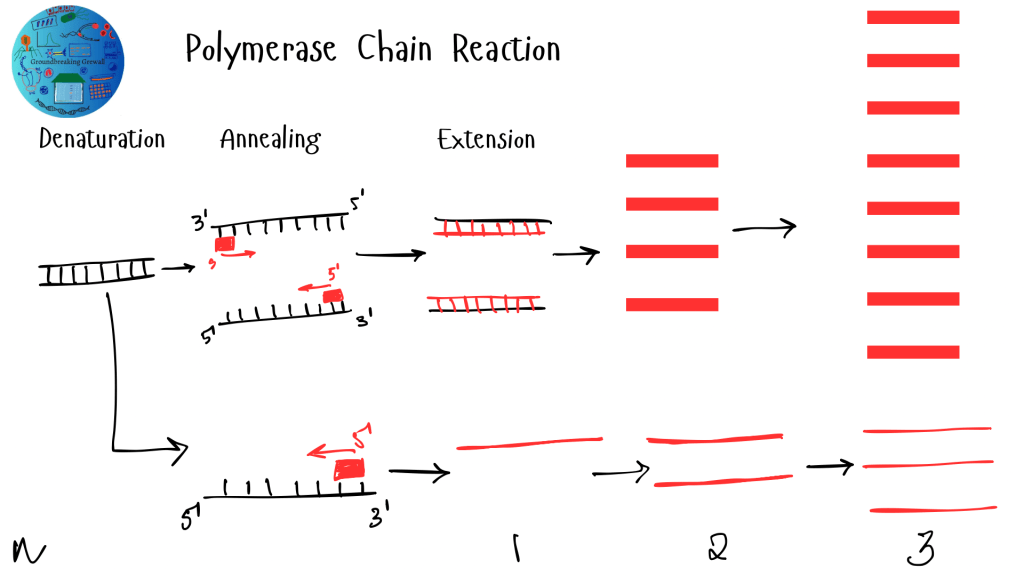
A PCR reaction is divided into three steps- denaturation, annealing of primers and extension. There are two primers, the forward and reverse.
B. What if there was only one primer added to the mix?
While this is a relatively simple concept, I have absolutely no idea why I blabbered my way through it.
Each primer helps to amplify one strand of the double stranded template strand. If there was only one primer, only one of the strands would be amplified.
C. Then how much is the amplification of the template?
If there are two strands, and say, n, number of cycles of a PCR reaction, then the amplification is measured as 2^n. This is assuming we have only 1 dsDNA as template.
So, if it is just one primer, only one strand will be amplified. I believe to calculate that, it would be 1*n. So in five cycles, there would be only 5 ssDNA without the complementary strand formed in case of 1 primer whereas in case of both forward and reverse primers, it would be 2^5 which is about 32 double stranded DNA molecules.
2. A. Where is AMR produced?
One of my projects is on antimicrobial resistant pathogens causing skin infections and preventing wound healing. The question seemed to be about where AMR is found- it occurs because of mutations in the bacteria or pathogen. These can be in the form of chromosomal mutations or acquiring extra chromosomal DNA (plasmids) from other donor bacteria which have these genes.
A follow up to that is that they are produced by bacteria for protecting themselves from antibiotics. For example, Penicillium chrysogenum or P. nalgiovense produce penicillin against bacteria as a survival advantage.
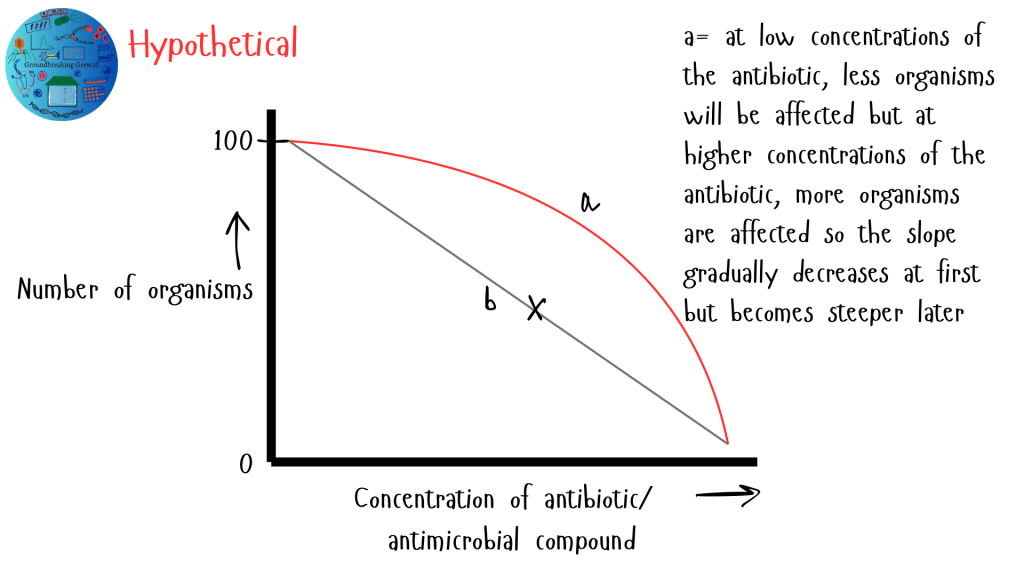
B. Using a graph, explain the consequence of the increasing the concentration of an antibiotic to the number of organisms.
Another simple concept- higher the concentration of antibiotic, lesser the number of surviving organisms. The slope of the graph should show a decline.
3. Stages of wound healing.
Inflammation, proliferation and remodelling.
I will probably never forget this in my life. My entire project for the past year was on testing the safety and efficiency of RNAi therapy on wound healing in chronic or non-healing wounds. I felt that I needed to learn about the construction of the diabetic mouse models or the caspase-8 knockout models (these are the mouse models I have worked with). Instead, I should’ve focused on the panel of interviewers and what their work entails. If they’re more familiar with the in-vitro workings, I should’ve brushed up on that instead of worrying about the in-vivo. I should’ve known about wound healing and the markers which need to be tested to check if wound healing occurs while following these stages to the T. Somewhere in the back of my mind, I knew this, and yet, I didn’t.
Basics man.
My final suggestion would be this- focus on what work has been done and the common techniques used in the lab, most of the questions will be based on those.

 Ground breaking Grewall
Leave a comment